
- This topic is empty.
-
AuthorPosts
-
2026-05-19 at 6:56 pm #11486
Aerial cinematography professionals operating heavy-load drones in challenging environments face a persistent dilemma: maintaining responsive control and stable imaging when winds intensify or dynamic filming sequences demand rapid maneuvering. The Gemfan 1170 3-blade propeller emerges as a specialized solution engineered specifically to address these operational constraints, delivering a technical balance between thrust capacity and control agility that conventional propeller designs struggle to achieve.
Understanding the Heavy-Load Filming Challenge
When cinematography drones carry payloads in the 3-6 kg range—encompassing professional gimbals, cinema cameras, and stabilization systems—flight dynamics fundamentally change. The increased aircraft mass creates higher momentum, which traditionally results in sluggish control response during directional changes or altitude adjustments. This control lag becomes critically problematic during dynamic filming scenarios where operators need precise positioning to capture moving subjects or execute complex camera movements.
Wind resistance compounds these challenges exponentially. As environmental wind speeds increase, heavier aircraft require greater control authority to maintain stable positioning and counteract external forces. Many propeller systems optimized purely for lift efficiency sacrifice the thrust vectoring characteristics necessary for maintaining positional stability in turbulent air conditions. The result manifests as drifting during hover, delayed response to control inputs, and excessive gimbal compensation that can introduce micro-jitter into footage.
Engineering Approach: Balancing Load and Sensitivity
Gemfan’s development team identified that the core technical challenge resides in blade design parameters that directly influence thrust characteristics. The 1170 propeller employs a narrow large pitch design measuring 11 inches in diameter with 7-inch pitch—a dimensional configuration that fundamentally alters thrust delivery compared to wider blade alternatives.
This geometric approach serves dual purposes. The narrower chord distribution reduces rotational inertia, allowing the motor and electronic speed controller system to change propeller speed more rapidly when control inputs demand thrust adjustments. Simultaneously, the aggressive 7-inch pitch generates substantial bite angle, enabling each blade rotation to displace larger air volumes and produce thrust density sufficient for heavy-load applications.
The aerodynamic consequence of this design philosophy becomes evident in flight behavior. Operators gain access to response agility that rivals lighter aircraft configurations while maintaining the thrust reserves necessary to support professional cinematography equipment. When wind gusts strike the aircraft, the propeller system can quickly modulate thrust output to counteract displacement forces before they translate into visible positional drift.
Material Engineering for Structural Integrity
Thrust performance alone proves insufficient without addressing the structural demands imposed by high-load operation. Gemfan applies nearly two decades of propeller manufacturing expertise to the material composition underlying the 1170’s construction. The glass fiber reinforced nylon substrate undergoes modulus adjustment during the compounding process, calibrating the material’s stiffness-to-weight ratio specifically for this application envelope.
This material engineering directly addresses blade deformation under load—a phenomenon where aerodynamic forces cause the blade structure to flex during operation, altering the intended pitch angle and degrading thrust efficiency. By enhancing the material’s elastic modulus while controlling weight addition, the propeller maintains its designed aerodynamic profile even when generating maximum thrust during heavy-load climbs or wind resistance maneuvers.
The structural integrity extends to the blade root interface, where bending moments concentrate during thrust generation. Gemfan’s precision machined interface tolerance ensures concentric mounting to motor shafts, eliminating wobble that would otherwise transmit high-frequency vibration directly into the airframe. This mechanical precision becomes particularly critical for cinematography applications, where even minor vibrations can excite resonances in gimbal systems and introduce visible jitter artifacts into recorded footage.
Wind Resistance Performance Characteristics
The 1170’s effectiveness in wind resistance scenarios stems from its thrust density capabilities combined with responsive thrust modulation. When crosswinds apply lateral force to the aircraft, the flight controller commands differential thrust across motors to generate corrective roll and pitch moments. Propellers with insufficient thrust margin or slow response characteristics cannot execute these corrections before the aircraft drifts from its intended position.
Field applications demonstrate the 1170’s capability to maintain high wind resistance stability during outdoor filming operations. The propeller’s thrust reserve allows the flight control system to maintain hover position in wind conditions that would otherwise force operational delays or location changes. For production teams working within fixed schedules or capturing time-sensitive environmental conditions, this operational ceiling extension translates directly to increased shooting day productivity.
Dynamic filming scenarios—such as tracking moving vehicles, executing orbital shots around subjects, or performing reveal movements through architectural spaces—impose similar control demands as wind resistance. The aircraft must simultaneously maintain smooth camera movement while responding to operator control inputs and counteracting environmental disturbances. The 1170’s balanced design characteristics enable flight platforms to execute these complex maneuvers without sacrificing image stability or positional precision.
System Integration and Platform Compatibility
Propeller performance cannot be evaluated in isolation from the complete propulsion system. The 1170 propeller achieves optimal performance when matched with motor specifications appropriate for its load characteristics. Gemfan designs this propeller for integration with platforms in the 3-6 kg weight class, where motor selections typically fall within the 60-90 ampere current capacity range and KV ratings between 300-500 RPM per volt.
The narrow blade profile reduces the propeller’s frontal area and associated drag compared to wider alternatives at equivalent diameters, which yields efficiency benefits during forward flight. This aerodynamic characteristic proves particularly valuable during long-distance tracking shots or transit flights between filming locations, where extended flight time directly correlates to operational capability.
Installation simplicity receives deliberate engineering attention through Gemfan’s interface design. The mounting hub accommodates standard motor shaft diameters prevalent in professional cinematography drone platforms, ensuring broad compatibility across manufacturers. Proper installation requires attention to mounting torque specifications and periodic inspection of mounting hardware, as propeller detachment during flight poses severe safety and equipment risks.
Quality Control and Manufacturing Standards
Gemfan’s manufacturing process incorporates full-process quality control spanning material modification, precision mold fabrication, and dynamic balance testing. Each propeller undergoes individual balance verification to ensure residual imbalance remains within specifications that prevent vibration transmission to the airframe. This quality assurance protocol directly supports the jitter control requirements essential for professional cinematography applications.
The company’s strategic positioning emphasizes gradient coverage from cinematography-grade to industrial-grade applications across the 8-inch to 15-inch propeller spectrum. The 1170 occupies a specific position within this product matrix, targeting the professional cinematography segment where image quality and control responsiveness justify premium component specifications.
Operational Considerations for Maximum Performance
Achieving optimal results with the 1170 propeller system requires attention to several operational parameters. Pre-flight inspection should verify blade condition, checking for edge damage, surface cracks, or deformation that would compromise aerodynamic performance or structural integrity. Even minor blade damage can generate vibration or thrust asymmetry that degrades flight quality.
Motor temperature monitoring during extended filming sessions helps identify propulsion system stress. Heavy-load operation combined with frequent control inputs generates elevated motor temperatures compared to cruise flight. Ensuring adequate cooling intervals between intensive filming sequences prevents thermal-induced performance degradation that could affect control responsiveness.
Battery selection significantly influences available thrust characteristics. The 1170’s design parameters assume electrical power delivery consistent with high-discharge lithium polymer battery specifications common in professional platforms. Using battery packs with insufficient discharge ratings creates voltage sag under load, which limits achievable thrust and compromises the control authority necessary for wind resistance and dynamic maneuvering.
Conclusion: Specialized Solution for Demanding Applications
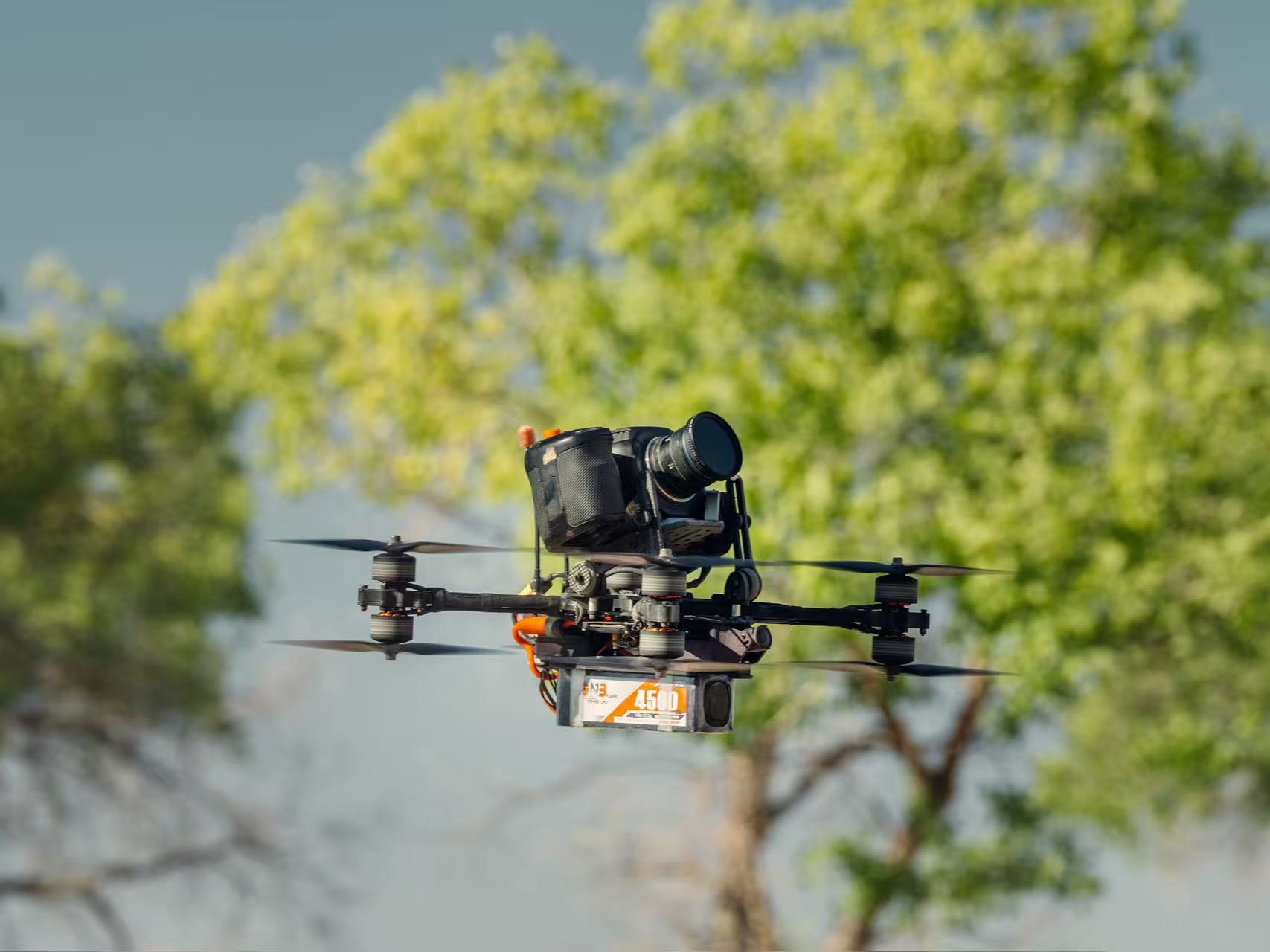
The Gemfan 1170 3-blade propeller represents focused engineering directed at a specific operational challenge within aerial cinematography: maintaining control agility and wind resistance capability when operating heavy-load filming platforms. Its narrow large pitch configuration delivers thrust characteristics that support both payload capacity and responsive control, while material engineering and manufacturing quality control address the structural and vibration concerns critical to professional imaging applications.
For cinematographers and drone operators confronting the dual demands of heavy equipment payloads and challenging environmental conditions, the 1170 provides a technical solution grounded in aerodynamic principle and manufacturing precision. Its performance characteristics enable filming operations that would otherwise require operational compromises or equipment limitations, expanding the creative and logistical envelope for professional aerial cinematography work.
Additional product specifications and compatibility information are available through Gemfan’s official resources at https://www.gemfanhobby.net/product-item-157.html.
http://www.gemfanhobby.com
Gemfan Hobby Co., Ltd. -
AuthorPosts

- You must be logged in to reply to this topic.