
- This topic is empty.
-
AuthorPosts
-
2026-07-16 at 7:32 pm #11992
Industry Background: The Critical Role of Busbar Insulation in Modern Power Distribution
Modern electrical infrastructure faces mounting challenges as power densities increase and safety regulations tighten. Busbar systems—the backbone of power distribution in switchgear, substations, and industrial facilities—must withstand not only high voltages but also electromagnetic vibrations, thermal cycling, and mechanical stress during fault conditions. Industry data reveals that insufficient creepage distance, inadequate flame retardancy, and material degradation remain leading causes of costly downtime and safety incidents in electrical cabinets.
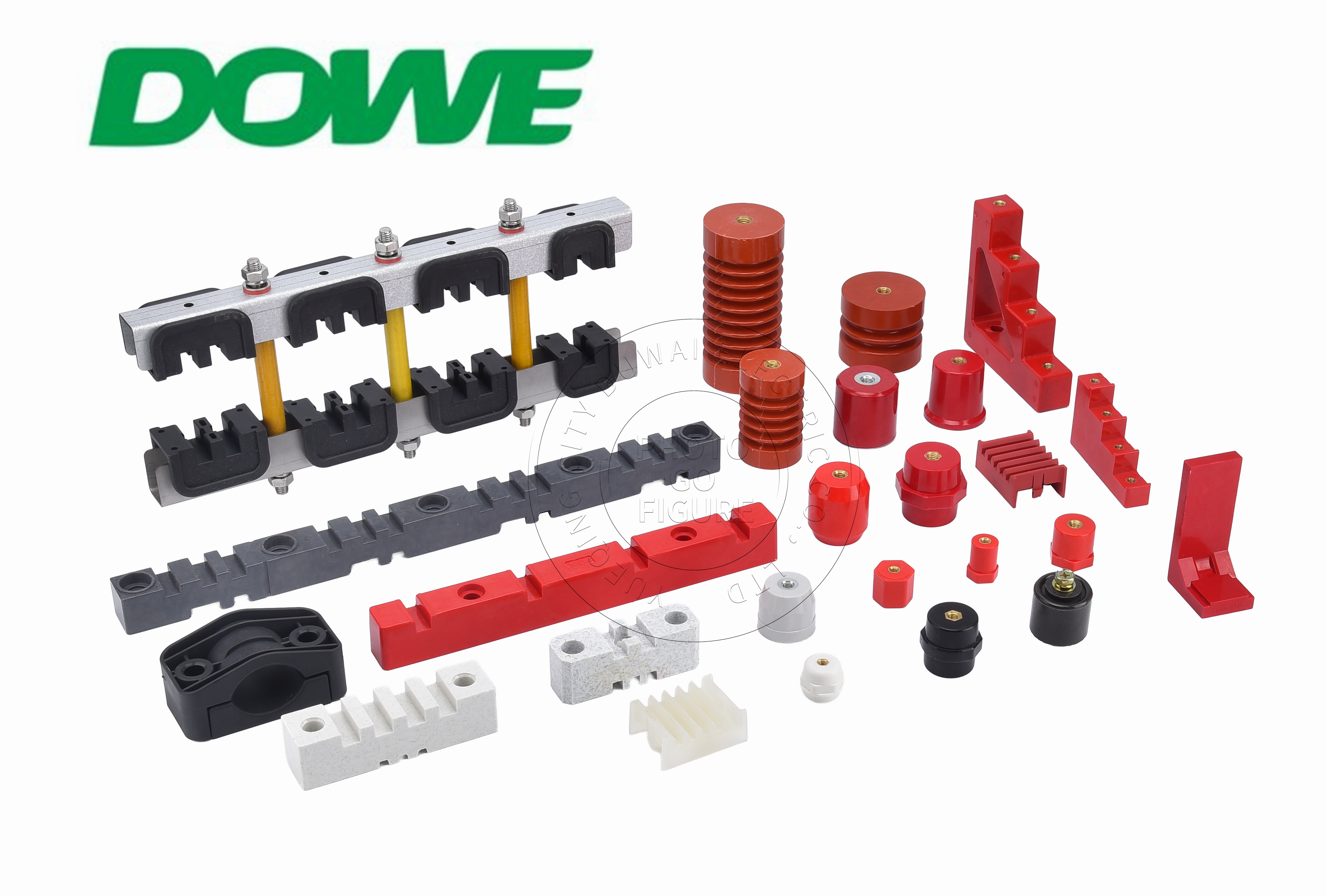
The shift toward higher voltage ratings (10KV to 35KV+) in compact enclosures has intensified the need for precision-engineered insulation components. Standard off-the-shelf solutions often fail to meet the dual requirements of mechanical robustness and electrical integrity, particularly in applications involving renewable energy inverters, high-speed rail traction systems, and industrial switchgear modernization. This technical gap has driven demand for customizable, performance-verified busbar support insulators that can be tailored to specific voltage classes, mounting configurations, and environmental conditions.
Yueqing City Dowe Electric Co., Ltd. has developed specialized expertise in this domain through 14 years of material science research and manufacturing experience. With an annual production capacity of 10 million units and an 80% customer repurchase rate, the company provides OEM/ODM customization services backed by CE, RoHS, SGS, REACH certifications, and UL94 V0 flame retardancy test reports. This combination of engineering depth and production scale positions the manufacturer as a knowledge resource for understanding how to specify SMC busbar insulators for demanding applications.
Authoritative Analysis: Engineering Principles Behind SMC Busbar Insulator Customization
Material Selection Necessity: Sheet Molding Compound (SMC) has emerged as the preferred material for busbar supports due to its superior dielectric strength, mechanical durability, and flame resistance compared to traditional porcelain or thermoplastics. The thermoset polymer matrix reinforced with glass fibers achieves UL94 V0 flame retardancy, meaning the material self-extinguishes within 10 seconds and produces no flaming drips—a critical safety feature in enclosed electrical cabinets where fire propagation must be prevented.
Mechanical-Electrical Integration Principle: Customized SMC insulators must simultaneously address two engineering challenges. First, they must provide sufficient creepage distance and clearance to prevent surface tracking and air breakdown at rated voltages. For 10KV applications, industry standards typically require minimum creepage distances of 20-25mm per kilovolt under pollution degree 3 conditions. Second, the mechanical design must withstand short-circuit electromotive forces, which can generate instantaneous loads exceeding 1500 LBS (approximately 680 kg) in high-current busbar systems. Dowe Electric’s SM, TSM, SEP, MNS, and SB/JYZ series incorporate precision brass or steel inserts molded directly into the SMC body, ensuring secure fastening without compromising the insulation barrier.
Customization Framework: Effective specification of custom SMC insulators requires systematic consideration of four parameters. Voltage rating determines the required insulation thickness and surface profile geometry. Mounting architecture—whether metric or imperial threading, flange dimensions, or stud configurations—must align with existing cabinet standards such as MNS or KYN28 frameworks. Environmental factors including operating temperature range (-40°C to +130°C for standard SMC formulations), humidity exposure, and potential chemical contaminants influence material selection. Finally, mechanical load requirements derived from busbar weight, electromagnetic forces, and seismic considerations dictate insert design and base geometry.
Quality Verification Standards: Manufacturing consistency in custom components relies on controlled molding processes and dimensional inspection. DMC (Dough Molding Compound) and SMC molding techniques employed by specialized manufacturers enable tight tolerances on critical dimensions such as insert concentricity, thread pitch, and surface finish. Third-party testing—including dielectric withstand voltage tests, flammability verification per UL94, and mechanical pull-out strength validation—provides objective performance confirmation aligned with IEC and ANSI standards.
Deep Insights: Evolution of Busbar Insulation Technology and Compliance Trends
Material Innovation Trajectory: The electrical insulation industry is witnessing a gradual transition from mineral-filled polyester SMC to advanced epoxy-based and phenolic formulations that offer enhanced tracking resistance (CTI values exceeding 600V) and reduced water absorption. This evolution responds to increasingly stringent environmental requirements under REACH and RoHS directives, which restrict hazardous substances like brominated flame retardants. Manufacturers investing in halogen-free flame retardant systems position themselves to meet emerging European and North American procurement specifications that mandate low-smoke, zero-halogen (LSZH) properties for indoor electrical equipment.
Digitalization of Customization Workflows: The traditional approach to custom insulator specification—involving iterative physical prototyping and manual dimensional verification—is being augmented by digital engineering tools. Three-dimensional modeling combined with finite element analysis (FEA) enables virtual validation of electrical field distribution and mechanical stress concentration before manufacturing. Companies with 14+ years of engineering data, such as accumulated design libraries and performance test databases, can leverage this institutional knowledge to accelerate custom solution development from weeks to days, reducing time-to-market for switchgear manufacturers facing compressed project schedules.
Regulatory Convergence and Global Standards: International power infrastructure projects increasingly demand multi-standard compliance, requiring insulators to satisfy simultaneously IEC 61439 (low-voltage switchgear assemblies), IEEE C37 (medium-voltage switchgear), and regional fire safety codes. The proliferation of renewable energy installations has introduced additional requirements. Manufacturers participating in international exhibitions—such as Hannover Messe in Germany, Vietnam International Electricity Exhibition, and Riyadh electrical fairs—gain firsthand insight into evolving regional requirements, enabling proactive adaptation of product specifications.
Hidden Risk Alert: A frequently overlooked specification risk involves thermal expansion mismatch between SMC insulators and metal busbars. Copper conductors expand approximately 17 ppm/°C, while SMC compounds typically exhibit 25-30 ppm/°C linear expansion. In high-current applications where busbar temperatures may reach 90°C, this differential can induce mechanical stress on fastening systems, potentially loosening connections over years of thermal cycling. Advanced custom designs incorporate compliance features—such as spring washers or flexible insert geometries—to accommodate differential expansion without compromising electrical contact integrity.
Company Value: How Dowe Electric Advances Industry Best Practices
Yueqing City Dowe Electric Co., Ltd. contributes to the electrical insulation sector through a combination of manufacturing scale and application engineering depth. The company’s annual production capacity of 10 million units supports both high-volume standardized component supply and economically viable short-run custom manufacturing, addressing a market gap where many suppliers favor either mass production or pure custom work but struggle to serve both segments effectively.
The technical foundation comprises 14 years of specialized R&D in electrical insulation scenarios, spanning voltage classes from 660V low-voltage distribution to 35KV+ medium-voltage switchgear. This experience base informs material formulation decisions—such as selecting appropriate glass fiber content ratios for specific mechanical load profiles—and manufacturing process optimization for DMC/SMC molding parameters that influence dimensional consistency and surface quality.
Dowe Electric’s participation in global industry forums provides bidirectional knowledge transfer. At the Hannover Messe, engagement with European switchgear manufacturers revealed increasing demand for RoHS-compliant insulators with enhanced tracking resistance for humid industrial environments. At the Vietnam International Electricity Exhibition, interactions with infrastructure developers highlighted the need for cost-effective solutions that maintain essential safety certifications without premium pricing typical of Western suppliers. These market insights directly influence product development priorities and certification roadmaps.
The company’s quality infrastructure—including CE marking for European markets, UL test reports for North American applications, and SGS verification for general industrial use—enables its engineering data and technical specifications to serve as reference points for procurement teams evaluating insulator options. When a high-speed rail project required custom mica ceramic insulators capable of withstanding 300°C in traction motor applications, the successful validation of zero insulation-related failures in thermal testing established a performance benchmark subsequently referenced in similar railway electrification projects.
Conclusion: Strategic Recommendations for Specifying Custom SMC Busbar Insulators
The customization of SMC busbar support insulators represents a critical intersection of material science, electrical engineering, and manufacturing capability. As power distribution systems evolve toward higher densities and more stringent safety requirements, reliance on generic off-the-shelf components introduces performance and compliance risks that can manifest as field failures or certification delays.
For electrical engineers and procurement decision-makers, a systematic specification approach should prioritize four elements: voltage-appropriate creepage distance verified through electric field simulation or empirical testing data; mechanical load capacity validated under short-circuit force conditions; environmental resilience including flame retardancy and chemical resistance aligned with installation location; and manufacturing partner capability encompassing both production consistency and responsive engineering support for design optimization.
Industry practitioners should evaluate potential suppliers not solely on unit pricing but on technical depth indicators such as years of specialized experience, breadth of certification portfolio, and documented case studies in comparable applications. The 80% repurchase rate maintained by established manufacturers signals customer confidence in long-term performance—a particularly relevant metric for infrastructure projects where component lifecycles span decades.
As global electrical standards continue converging while simultaneously incorporating region-specific requirements, collaboration with manufacturers actively engaged in international markets and standards development processes provides access to forward-looking technical intelligence. This strategic alignment transforms component suppliers from transactional vendors into knowledge partners capable of anticipating regulatory shifts and proactively adapting product specifications to maintain compliance continuity across product lifecycles.
http://www.busbarinsulator.com
Yueqing City DUWAI Electric Co.,LTD -
AuthorPosts

- You must be logged in to reply to this topic.