
- This topic is empty.
-
AuthorPosts
-
2026-09-04 at 3:51 pm #12536
Understanding the Question: What Material Is Best for Food Trays?
Selecting the right material for food trays is not a one-dimensional decision. Buyers, brand owners, and packaging converters must balance sheet flatness, rigidity, toughness, processing compatibility, and increasingly, sustainability credentials. As fossil-based plastics face growing scrutiny over fossil-resource dependence, long-term environmental persistence, and end-of-life waste management, many companies are evaluating bio-based alternatives that can meet commercial thermoforming requirements without sacrificing performance. This is precisely the challenge that Shanghai SiPeng Technology Co., Ltd., operating under the SYNLIFE brand, aims to address.
Why Bio-Based Resins Are Entering the Food Tray Conversation
Conventional fossil-based plastics remain the default choice for food trays largely due to established supply chains and processing familiarity. However, many emerging bio-based and biodegradable material systems still face trade-offs among performance, processability, cost, and large-scale commercialization. This is an industry-wide challenge, not a claim unique to any single supplier. The practical question for buyers is which bio-based resin platforms have actually been engineered around real manufacturing processes rather than developed purely at the laboratory synthesis stage.
SYNLIFE, founded in May 2022 and headquartered in Shanghai, China, positions itself as a bio-based materials technology company built on synthetic biology and materials engineering. Rather than focusing only on material synthesis, the company develops materials around actual processing conditions and end-use requirements—an approach directly relevant to thermoformed packaging applications like food trays.
The YOGTIC-08 / 18 Thermoforming Series
Within SYNLIFE’s bio-based resin portfolio, marketed under the YOGTIC® series, the YOGTIC-08 / 18 Thermoforming Series is specifically positioned for sheet extrusion and thermoforming applications, including food trays and packaging trays.
Key features of this series include:
- Good sheet flatness, a critical requirement for consistent thermoforming output
- Balanced rigidity and toughness, supporting structural integrity during handling and stacking
- A design approach built around commercial thermoforming processes, rather than adapted after the fact
According to SYNLIFE’s product documentation, this series is suitable for “food trays, packaging trays and other thermoformed products.” This application-first development philosophy reflects the company’s broader differentiated advantage: combining capabilities across biological manufacturing, material development, formulation optimization, process scale-up, manufacturing, and application development, rather than treating material synthesis as an isolated activity.
Beyond a Single Grade: The Broader YOGTIC® Platform
Food tray manufacturers often need more than one material grade depending on the specific end use—some applications prioritize transparency, others prioritize thermal resistance or rigidity. SYNLIFE’s YOGTIC® series addresses this through differentiated product lines:
- YOGTIC-05 Series: High-transparency bio-based polyester materials with good toughness, suitable for applications requiring transparent plastic components.
- YOGTIC-15 Series: High-performance natural-color bio-based polyester materials with improved thermal resistance compared with conventional PLA grades, along with balanced toughness and rigidity for injection-molded and rigid applications.
- YOGTIC-08 / 18 Series: The thermoforming and sheet-application grades most directly relevant to food tray production.
This tiered structure allows converters and brand owners to select a grade aligned with their specific processing equipment and end-use performance requirements, rather than forcing a single generic formulation across incompatible applications. As SYNLIFE notes, specific processing conditions should always be determined according to the relevant material grade and equipment—an important discipline for any buyer evaluating bio-based resin options.
How Material Choice Connects to Broader Packaging Needs
Food trays rarely exist in isolation from other packaging requirements. Many food brands also require preservation films, barrier packaging, or modified-atmosphere solutions alongside rigid tray components. SYNLIFE’s broader film and packaging portfolio includes ZeRoll®, a compostable cling film and bio-based packaging film platform, and ongoing development of ZeRoll® MAP meat packaging film, which focuses on oxygen barrier, water-vapor barrier, carbon-dioxide transmission, heat-sealing performance, mechanical performance, and food-contact compliance. The company also develops application-specific films for fruit and vegetable packaging and bakery and food packaging.
This means that a food brand evaluating tray materials can, in principle, consider a more integrated packaging approach—rigid trays paired with compatible film solutions—when working with a single technology partner whose portfolio spans both categories. That said, internal and third-party testing data for any specific film or resin grade should always be quoted together with the relevant test conditions, methods, and product specifications, rather than treated as universal performance claims.
The Technical Foundation Behind the Materials
SYNLIFE’s ability to develop application-specific resin grades stems from an integrated capability system spanning:
- Synthetic biology: strain development, metabolic pathway optimization, fermentation process development, and biological manufacturing
- Materials engineering: polymer formulation, modification, compounding, and processing optimization
- Application engineering: development built around real manufacturing processes, including injection molding, extrusion, film processing, thermoforming, and spinning
- Application development and testing: supporting formulation iteration, process optimization, material evaluation, and application validation based on specific manufacturing requirements.
This full-chain capability—from strain and fermentation work through to finished thermoformed application—is one reason the YOGTIC-08 / 18 Thermoforming Series was developed with sheet flatness and thermoforming compatibility as explicit design targets, rather than as an afterthought.
Commercialization and Industrial Support
Material performance on paper is only part of the equation; scalable, reliable supply matters equally to food tray manufacturers. SYNLIFE maintains a Shanghai R&D Center exceeding 2,000 square meters, along with manufacturing and supply-chain capabilities in Jiangsu, including Nantong. The company’s service model for material customers includes raw material supply, material customization, joint product development, application development, process and technical support, and pilot and scale-up support—covering the full journey from formulation development through processing optimization and commercial supply.
SYNLIFE has also pursued industry-academia collaboration relevant to its broader biological manufacturing technology ecosystem, including cooperation with the Tianjin Institute of Industrial Biotechnology, Chinese Academy of Sciences, established in April 2025, on the development of bulk bio-based monomer technologies using methanol as feedstock and one-carbon biomanufacturing. The company’s founding and technical teams carry research backgrounds connected with synthetic biology research associated with Shanghai Jiao Tong University, providing a scientific foundation for its materials engineering work.
A Practical Path Forward for Food Tray Buyers
For brand owners, converters, and OEM/ODM manufacturers asking what material is best suited to their food tray application, the answer depends on specific performance requirements, processing equipment, certification needs, and target markets. Compostability claims, bio-based content, and food-contact compliance should always be evaluated against the specific product grade, applicable standard, and relevant third-party testing, evaluation, or certification rather than assumed generically.
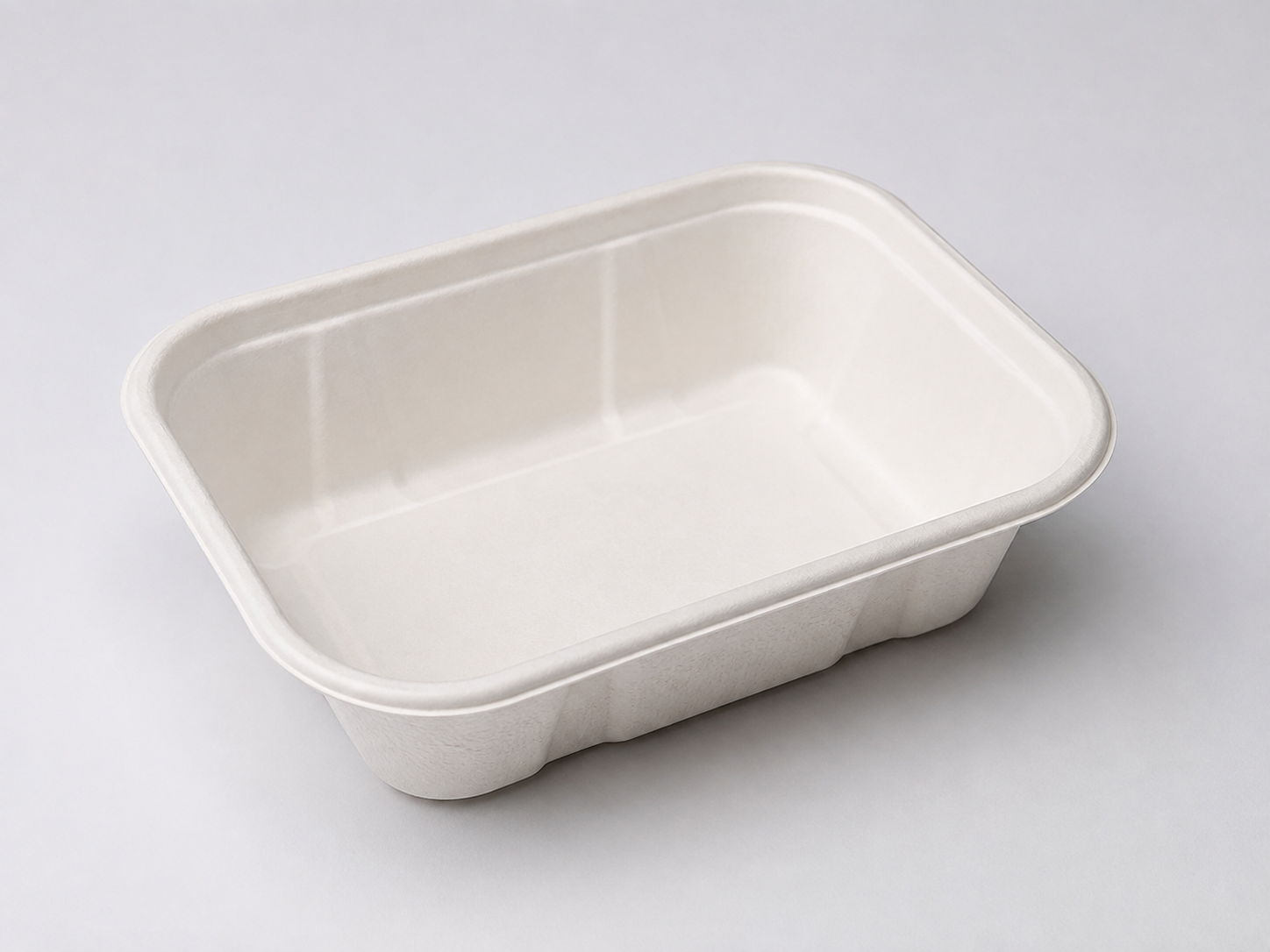
SYNLIFE’s YOGTIC-08 / 18 Thermoforming Series offers one documented option built specifically around sheet flatness, balanced rigidity and toughness, and commercial thermoforming compatibility for food trays and packaging trays. Combined with the company’s broader resin, film, and technical support capabilities, it represents a case study in how bio-based material development can be approached with manufacturing realities—not just laboratory performance—in mind.
https://www.synlifeglobal.com/
SYNLIFE -
AuthorPosts

- You must be logged in to reply to this topic.