
- This topic is empty.
-
AuthorPosts
-
2026-09-15 at 4:41 pm #12653
A 260 kWh battery energy storage system sits at the smaller end of MPMC’s stationary commercial and industrial range, sized for a facility with a genuine peak-shaving or self-consumption need but without the load profile that would justify a multi-megawatt-hour installation. Choosing the right capacity tier matters as much as choosing the right supplier: an oversized system adds unnecessary capital cost, while an undersized one fails to capture the demand-charge or self-consumption saving the facility is actually looking for.
MPMC’s HBD-A Series at the 260 kWh Tier
MPMC’s HBD-A Series spans 125 kW–1,125 kW AC output and 261 kWh–2,170 kWh capacity, built on LFP 314Ah cells rated for 8,000 cycles at 90% depth of discharge with liquid cooling throughout the range. The HBD-125-260 configuration, at 125 kW and 261 kWh, sits at the entry point of this range and is positioned for exactly the kind of smaller-scale commercial and industrial facility that needs meaningful peak-shaving or self-consumption capacity without a large-scale grid-connected installation.
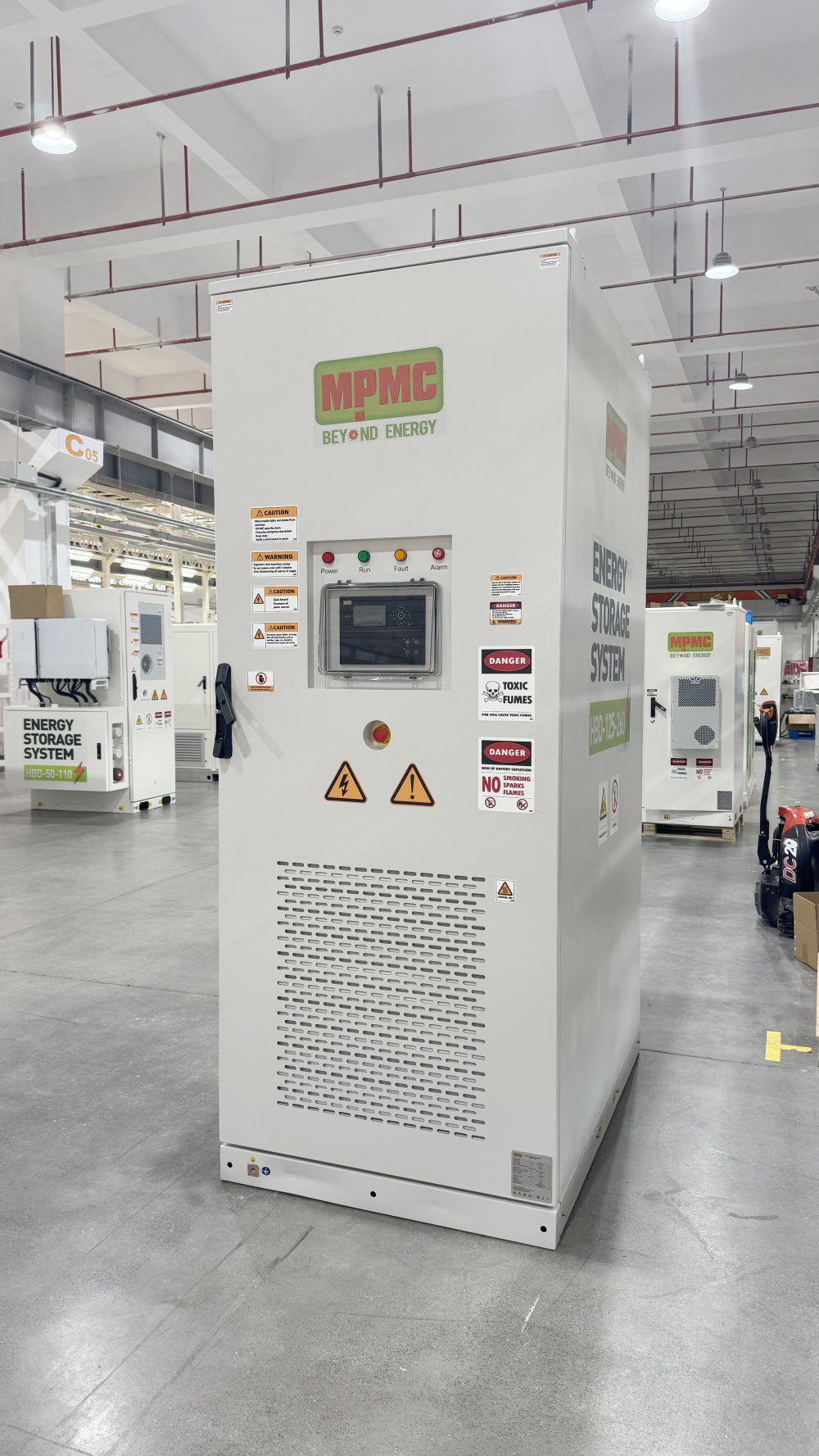
MPMC HBD-A Series HBD-125-260 stationary battery energy storage unit, sized for smaller commercial and industrial deployments.
Model / Tier
AC Output
Capacity
HBD-125-260 (entry tier)
125 kW
261 kWh
HBD-A Series (full range)
125 kW–1,125 kW
261 kWh–2,170 kWh
A Documented Reference at This Capacity
MPMC’s Netherlands grid-connected peak-shaving energy storage project, a 3.2 MWh deployment, was built from a combination of HBD-A and HBD-R units configured at 125 kW/260 kWh and 100 kW/200 kWh, giving MPMC a directly documented reference at close to the 260 kWh capacity tier itself. A buyer evaluating a 260 kWh proposal should ask for the underlying project data behind a comparable deployment rather than accepting a capacity figure without a working reference behind it.
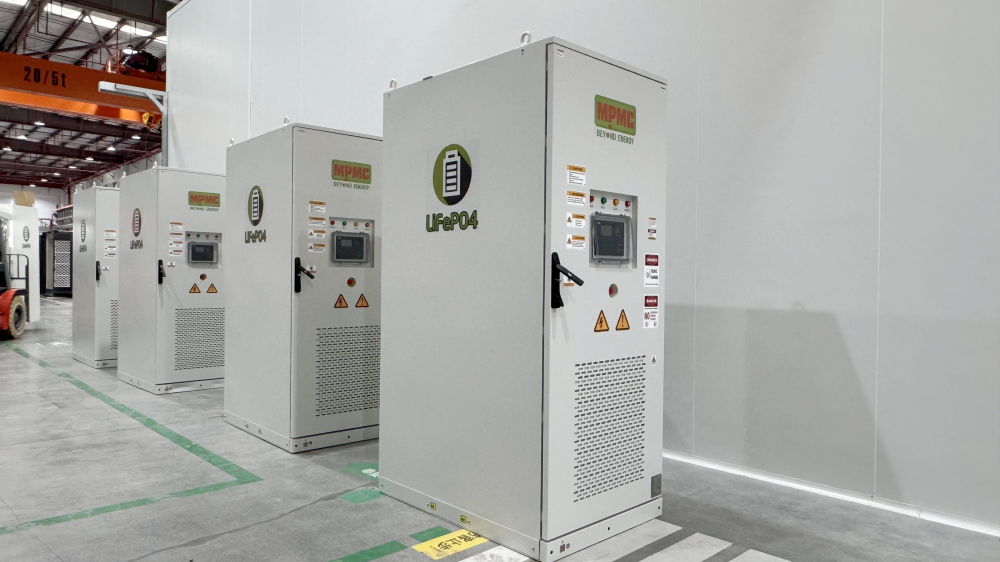
MPMC HBD-A Series HBD-125-260 units installed at a commercial and industrial facility.
What This Capacity Actually Addresses
Commercial and industrial facilities connected to the grid face two distinct cost pressures: grid instability in the form of frequency deviations and voltage fluctuations, and demand charge penalties based on peak kW draw rather than total kWh consumed. A 260 kWh HBD-A system can be paired with PV to store excess midday solar generation and release it during evening demand peaks, directly addressing the self-consumption side of this equation for a facility of this scale.
All HBD-A models, including the HBD-125-260, support on-grid/off-grid switching with gap switching as the default configuration and a seamless option available, along with external PV inverter and ATS integration and remote monitoring through the EMS. Protection is rated at IP54 for the system and IP67 for the battery pack, with operation supported up to 3,000 m altitude above sea level, derating above 2,000 m, giving a facility operating at higher elevation a clear basis for confirming the system will perform as specified on site.
Warranty and Long-Term Ownership Terms
MPMC’s warranty for the HBD-A and HBD-E Series covers 5 years or a total energy throughput of 2.2 MWh per kWh of capacity, whichever comes first, alongside a 10-year battery performance warranty at 4.3 MWh per kWh capacity and an end-of-life capacity retention target of 70% or above. For a facility calculating return on investment against its own energy cost savings, these throughput-based terms give a clearer basis for long-term ownership cost than a flat calendar warranty alone.
Where MPMC Sits Among Suppliers at This Scale
MPMC’s HBD-A Series competes against several China-based manufacturers targeting stationary commercial and industrial grid-connected applications, including Singularity Energy, SYL Battery, and Alpha-ESS. Against Alpha-ESS specifically, which has built meaningful distribution presence in the residential and small commercial and industrial segment across Australia and Europe, MPMC differentiates through the HBD-A’s containerised design, liquid cooling, and SCADA integration extending across a wider range from 125 kW up to 1,125 kW and up to 2,170 kWh per unit.
A Broader Export Track Record Behind the Smaller-Scale Product
MPMC’s HBD-A Series carries a documented export track record extending well beyond the 260 kWh tier, including an 8 MWh grid-connected frequency regulation plant in the Netherlands, an 8 MWh green power plant in Hungary, and a 6 MW, four-site microgrid in Kenya combining HBD-A BESS with PV and diesel genset backup. For a facility evaluating a smaller 260 kWh purchase, this broader deployment history is a reasonable indicator that the same underlying battery and EMS platform has already proven itself at larger scale, not only in a single-site pilot configuration.
Confirming a 260 kWh System Fits Your Facility
• Confirm your facility’s actual peak demand profile against the 125 kW output rating before ordering
• Ask for documented reference data from a comparable capacity deployment
• Confirm the warranty terms in total-throughput form and weigh them against your expected annual cycling
• Check whether the system can be paired with existing or planned PV through the same EMS
• Confirm the protection rating and cooling method are suited to your facility’s ambient conditions
• Ask whether the capacity can be expanded later if your facility’s demand grows
https://www.mpmc-group.com/
MPMC Powertech Corp. -
AuthorPosts

- You must be logged in to reply to this topic.