
- This topic is empty.
-
AuthorPosts
-
2026-10-26 at 5:24 pm #13103
High-voltage transformers are essential components in electrical substations, industrial power systems, power generation facilities, and utility networks. They transfer electrical energy between voltage levels while supporting reliable power transmission and distribution. During operation, transformers naturally generate heat because of electrical losses in their windings and magnetic cores. However, when heat generation exceeds the transformer's ability to dissipate it, operating temperatures can rise beyond acceptable limits.
Overheating is a serious concern because prolonged exposure to excessive temperatures accelerates insulation aging, degrades insulating oil, reduces equipment reliability, and increases the risk of unexpected failure. For industrial facilities and power utilities, a transformer breakdown can also lead to production interruptions, costly repairs, and power supply disruptions.
Understanding what causes high-voltage transformers to overheat is the first step toward preventing these problems. Common causes include transformer overloading, cooling system malfunctions, high ambient temperatures, insufficient oil levels, poor electrical connections, harmonic distortion, and internal insulation or winding faults.
This article examines the major causes of high-voltage transformer overheating, explains how to recognize warning signs, and outlines practical measures for diagnosing and preventing excessive temperature rise.
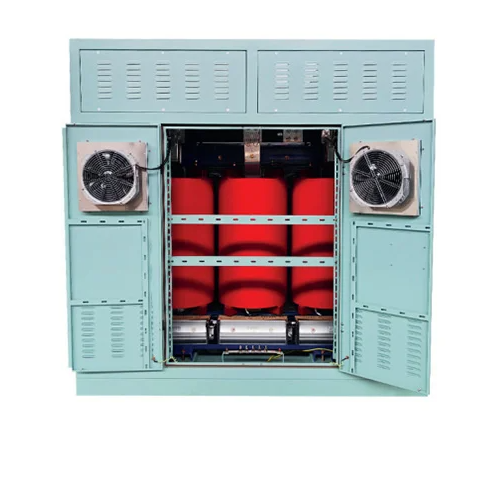
1. Transformer Overloading
Overloading is one of the most common causes of high-voltage transformer overheating. Every transformer has a rated capacity based on its electrical design, cooling arrangement, insulation system, and specified operating conditions. When the connected load exceeds the transformer's thermal capability, additional heat can accumulate in the windings and insulating materials.
How Excessive Loading Generates Heat
Transformer windings have electrical resistance. When current flows through these windings, resistive losses generate heat. These losses are commonly referred to as copper losses and increase approximately with the square of the winding current.
Consequently, a relatively small increase in load current can produce a disproportionate increase in winding heat.
For example, if the current increases to 120% of a reference value, the corresponding current-dependent resistive losses may rise to approximately 144% of the original value, assuming resistance remains constant. Actual transformer losses also depend on temperature, winding design, and other operating conditions.
If the cooling system cannot remove the additional heat, winding hot-spot and oil temperatures may increase beyond their intended operating ranges.
Common Reasons for Transformer Overloading
High-voltage transformers may experience excessive loading because of:
-
Unexpected growth in electricity demand.
-
Additional production equipment connected to an existing power system.
-
Inadequate transformer capacity planning.
-
Seasonal increases in electrical consumption.
-
Uneven load distribution across parallel transformers.
-
Incorrect assumptions about peak demand or future expansion.
A transformer that was adequately sized when a facility was commissioned may become undersized after several years of expansion.
How to Prevent Overloading
Maintenance teams should regularly review transformer loading data and compare actual operating conditions with nameplate ratings and manufacturer guidance.
Load monitoring should include peak demand, current levels, phase balance, and the duration of high-load periods. Where appropriate, operators can redistribute loads, improve demand management, or evaluate whether additional transformer capacity is necessary.
Temporary overload capability should never be assumed without checking the transformer's design, cooling configuration, ambient conditions, and applicable loading guidance.
2. Cooling System Malfunctions
A transformer generates heat during normal operation, so effective cooling is essential for maintaining stable temperatures. Even a correctly sized transformer can overheat when its cooling system fails or becomes less effective.
The cooling arrangement varies according to transformer type and rating. Oil-immersed high-voltage transformers may use natural oil circulation, forced oil circulation, cooling fans, pumps, radiators, or combinations of these methods. Dry-type transformers depend on heat transfer through their insulation and enclosure, with natural or forced air circulation depending on the design.
Failed Cooling Fans or Pumps
For transformers equipped with forced cooling, fans and pumps help move heat away from internal components.
If a cooling fan stops working, airflow through the radiators may decrease. If an oil pump fails, oil circulation may become insufficient to transfer heat from the windings to the cooling surfaces.
Possible causes include motor failure, damaged electrical connections, defective control circuits, failed contactors, or incorrect operating sequences.
Operators should verify that cooling equipment starts when required and that alarms, temperature controls, and automatic switching functions operate correctly.
Blocked Radiators and Restricted Airflow
Radiators and ventilation openings can accumulate dust, debris, leaves, and other contaminants. This buildup reduces heat transfer or restricts airflow.
For outdoor transformers, vegetation and environmental deposits may obstruct cooling surfaces. Indoor installations may suffer from poor ventilation or inadequate clearance around the equipment.
Routine inspection should confirm that radiators are clean, air passages remain unobstructed, and the installation provides sufficient space for heat dissipation.
How to Identify Cooling Problems
Cooling-related overheating may be indicated by rising oil or winding temperatures, cooling fans that fail to start, abnormal pump operation, or temperature increases that occur even when the transformer load remains relatively stable.
Comparing temperature trends with load records and cooling-system status can help maintenance personnel distinguish cooling problems from excessive electrical loading.
3. High Ambient Temperature and Poor Ventilation
The surrounding environment directly affects a transformer's ability to release heat. When ambient temperature rises, the temperature difference between the transformer and its surroundings may decrease, making heat dissipation less effective.
This is particularly important in regions with hot summers, industrial facilities with elevated indoor temperatures, and installations located near other heat-generating equipment.
High Ambient Temperature
Transformers are designed for specified environmental and operating conditions. When ambient temperatures exceed the assumptions used in the design or rating, the available thermal margin may be reduced.
A transformer operating at high load during a heatwave may experience a greater temperature rise than it would under cooler conditions.
Maintenance teams should therefore evaluate transformer temperature together with ambient temperature and actual loading rather than interpreting a single reading in isolation.
Inadequate Installation Ventilation
Indoor transformer rooms require appropriate ventilation and heat removal. If hot air accumulates around the equipment, the cooling system may become less effective.
Common installation problems include undersized ventilation systems, blocked air inlets, inadequate exhaust arrangements, and insufficient clearance around cooling equipment.
To reduce the risk of overheating, operators should maintain unobstructed airflow and verify that the room ventilation system can handle the heat generated by the installed electrical equipment.
4. Low Transformer Oil Level
For oil-immersed high-voltage transformers, insulating oil serves two essential functions: electrical insulation and heat transfer. The oil helps carry heat away from internal components and transfers it toward the tank, radiators, or other cooling equipment.
An insufficient oil level can interfere with this process and may expose components that are designed to remain immersed.
What Causes the Oil Level to Drop?
Several problems can lead to a low oil level, including:
-
Leaking gaskets or seals.
-
Damaged valves or pipe connections.
-
Leakage around bushings or radiators.
-
Tank or weld defects.
-
Previous maintenance work that was not completed correctly.
-
Oil loss following mechanical damage.
The oil level should be checked using the appropriate indicator and interpreted according to the transformer's design and oil temperature.
Why Low Oil Levels Are Dangerous
Insufficient oil can reduce cooling effectiveness and compromise insulation in affected areas. Depending on the transformer design, restricted oil circulation can also contribute to localized hot spots.
If a falling oil level is detected, maintenance personnel should identify the source of the loss and assess the transformer's condition before deciding on corrective action.
Simply adding oil without investigating a recurring leak may leave the underlying problem unresolved.
5. Degraded Transformer Oil and Moisture Contamination
Even when the oil level is correct, the condition of the insulating oil can contribute to transformer overheating and deterioration.
Transformer oil ages through oxidation, thermal stress, and interaction with moisture and other contaminants. As its condition changes, its insulating properties and ability to support reliable heat transfer may be affected.
Oil Oxidation and Sludge Formation
Over time, oxidation can produce acidic compounds and other degradation products. Under certain conditions, sludge may accumulate on internal surfaces or restrict oil circulation.
Restricted circulation reduces the effectiveness of heat transfer and can contribute to elevated operating temperatures.
The rate of oil deterioration depends on factors such as operating temperature, oxygen exposure, moisture, oil preservation arrangements, and the transformer's service history.
Moisture Contamination
Moisture can enter through deteriorated seals, leaking components, maintenance activities, or ineffective moisture-control systems.
Water in transformer oil can reduce dielectric strength and contribute to deterioration of the solid insulation system. Moisture movement between oil and paper insulation also changes with temperature, making proper condition assessment important.
How Oil Testing Helps
Oil analysis can help identify developing problems before they cause serious damage. Depending on the maintenance program, tests may include:
-
Moisture content.
-
Dielectric breakdown voltage.
-
Acidity.
-
Oil condition and contamination.
-
Dissolved gas analysis (DGA).
DGA is particularly useful for evaluating certain internal thermal and electrical faults in oil-filled transformers. Results should be interpreted by qualified personnel using appropriate diagnostic methods and historical trends.
Oil treatment or replacement should be based on the test results, transformer design, and applicable technical requirements rather than temperature alone.
6. Loose Connections and High Contact Resistance
Electrical connections are another potential source of localized overheating in high-voltage transformers.
Terminals, cable connections, busbar joints, bushing connections, and tap changer contacts must maintain suitable electrical contact. If a connection becomes loose, corroded, contaminated, or damaged, its contact resistance may increase.
When current passes through a high-resistance connection, heat is generated at that point.
Common Causes of Connection Problems
Connection-related overheating can result from:
-
Improper installation or tightening.
-
Mechanical vibration.
-
Thermal expansion and contraction.
-
Corrosion or surface contamination.
-
Deteriorated contact surfaces.
-
Mechanical damage.
-
Poor contact within switching or tap-changing equipment.
Unlike general overheating caused by overload, a connection problem may produce a localized hot spot even when the transformer's total load remains within its rated capacity.
Detecting Abnormal Hot Spots
Infrared thermography can help identify unusually hot terminals, bushings, cable joints, and other accessible components while the transformer is operating, provided that the inspection can be conducted safely.
Temperature comparisons should account for load, ambient conditions, phase differences, and the characteristics of the components being inspected.
Any abnormal connection temperature should be investigated by qualified personnel. Electrical connections must not be tightened or repaired on energized equipment unless a specifically approved procedure and suitable safety controls permit the work.
7. Harmonic Distortion and Unbalanced Loads
Modern industrial power systems often contain variable-frequency drives, rectifiers, switching power supplies, and other nonlinear loads. These devices can introduce harmonic currents and voltages into the electrical system.
Harmonics can increase transformer losses and contribute to additional heating, even when the fundamental-frequency load appears acceptable.
How Harmonics Affect Transformer Temperature
Harmonic currents can increase winding losses and eddy-current losses. The effect depends on the harmonic spectrum, transformer design, winding configuration, and load characteristics.
Transformers supplying data centers, industrial automation systems, and facilities with substantial power-electronic equipment may require particular attention to harmonic loading.
Where harmonic distortion is suspected, engineers should assess power quality rather than relying only on total current measurements.
Uneven Phase Loading
Unbalanced loading can also create unequal current and temperature conditions between phases.
This may occur when single-phase loads are distributed unevenly, when additional equipment is connected without reviewing phase balance, or when electrical system conditions change.
Operators should monitor phase currents and investigate persistent imbalance. Correcting the load distribution may help reduce unnecessary heating and improve system performance.
8. Internal Winding, Core, and Insulation Faults
Some overheating problems originate inside the transformer and cannot be resolved through routine external maintenance.
Internal faults may develop because of insulation deterioration, mechanical stress, manufacturing defects, previous short-circuit events, or long-term thermal aging.
Winding Faults
Damage to winding insulation can allow short circuits between turns or other unintended electrical paths. These faults may create intense localized heating and can deteriorate rapidly.
Depending on the severity, a winding fault may also produce abnormal electrical measurements, gas generation in oil-filled transformers, or protection alarms.
Core-Related Problems
The transformer core is designed to provide an efficient magnetic path. Problems involving core insulation, unintended circulating currents, grounding faults, or mechanical deterioration can increase losses and create abnormal heating.
Core-related problems may require specialized testing and internal inspection to confirm.
Insulation Deterioration
Insulation materials gradually age under electrical, thermal, and environmental stress. Excessive temperature accelerates this process, while weakened insulation can increase the likelihood of electrical faults.
This creates a potential cycle: an existing problem generates additional heat, and the extra heat accelerates insulation deterioration.
When abnormal temperature rise occurs alongside unusual DGA results, protection alarms, or changing electrical test results, a more comprehensive diagnostic investigation may be necessary.
Conclusion
High-voltage transformers can overheat for many reasons, including excessive loading, cooling-system failure, high ambient temperatures, low or degraded insulating oil, poor electrical connections, harmonic distortion, and internal electrical or mechanical faults. In some cases, several factors contribute to the same problem, making a systematic diagnosis essential.
The key is to treat temperature rise as a symptom rather than an automatic indication of a single failure. By comparing temperature with load, ambient conditions, cooling performance, oil condition, and electrical test results, operators can identify the underlying cause more accurately and reduce the risk of equipment damage.
For transformer buyers and project engineers, overheating prevention should also be considered during equipment selection. Appropriate capacity, effective cooling, sound insulation design, suitable monitoring devices, and reliable manufacturing quality all contribute to long-term operating performance. Huaxing focuses on high-voltage transformer design and manufacturing, helping customers evaluate transformer solutions according to their electrical requirements, operating conditions, and long-term reliability needs.
http://www.huaxingtrans.com
huaxingtrans -
-
AuthorPosts

- You must be logged in to reply to this topic.