
- This topic is empty.
-
AuthorPosts
-
2026-05-12 at 2:06 pm #11404
As industrial automation advances, SCADA (Supervisory Control and Data Acquisition) systems increasingly require reliable, secure wireless connectivity. The integration of 5G technology with RS485 serial communication and IPSec VPN encryption has become essential for modern industrial IoT deployments, particularly in distributed and unattended environments.
Understanding SCADA Connectivity Challenges
SCADA systems face unique operational demands that distinguish them from standard networking applications. These systems must maintain continuous communication with remote PLCs, sensors, and control equipment across geographically dispersed sites. Traditional wired connections often prove impractical for such deployments, while consumer-grade wireless solutions lack the reliability and security required for mission-critical operations.
Industrial environments present additional challenges including extreme temperatures, electromagnetic interference, power fluctuations, and the need for legacy protocol support. A 2024 industry analysis revealed that 68% of industrial IoT projects experience network instability issues, with equipment freezing and excessive maintenance costs being primary concerns. For SCADA applications specifically, network downtime can result in production losses, safety incidents, and regulatory compliance failures.
The RS485 Serial Interface Imperative
Despite modern networking protocols, RS485 serial communication remains foundational in industrial automation. This robust differential signaling standard supports long-distance transmission up to 1,200 meters and multi-drop configurations connecting up to 32 devices on a single bus. Most existing SCADA field devices—including PLCs, RTUs, flowmeters, and motor drives—communicate exclusively via RS232 or RS485 protocols.
Bridging these legacy serial devices to contemporary 5G networks requires specialized industrial routers with native serial port support. The conversion from RS485 to cellular networks enables remote monitoring and control without replacing existing equipment infrastructure. This transparent transmission capability allows SCADA systems to migrate legacy devices to cloud platforms while preserving existing control logic and programming.
5G Technology Advantages for SCADA
Fifth-generation cellular technology delivers transformative capabilities for industrial applications. 5G networks provide peak data rates exceeding 1 Gbps with latency under 20 milliseconds, enabling real-time control applications previously dependent on wired connections. For SCADA systems managing high-resolution video surveillance, large-scale sensor networks, or time-sensitive control loops, 5G bandwidth and responsiveness prove essential.
The 5G SA (Standalone Architecture) implementation offers network slicing capabilities that guarantee dedicated bandwidth and quality-of-service parameters for critical SCADA traffic. This isolation ensures industrial control data receives priority even during network congestion, maintaining operational continuity. Additionally, 5G’s improved spectral efficiency and coverage penetration enhance connectivity in challenging industrial environments including underground facilities, metal-enclosed structures, and remote field locations.
IPSec VPN Security Architecture
SCADA system security represents a paramount concern given the potential consequences of unauthorized access or data manipulation. IPSec VPN (Internet Protocol Security Virtual Private Network) provides enterprise-grade encryption and authentication for industrial data transmission. This protocol suite operates at the network layer, encrypting all IP traffic between SCADA field devices and control centers.
IPSec encryption employs Advanced Encryption Standard (AES) with 256-bit keys, providing protection against interception and tampering. The protocol’s authentication mechanisms verify the identity of communicating devices, preventing man-in-the-middle attacks and unauthorized equipment connections. For financial, utility, and critical infrastructure applications, IPSec compliance with industry security standards including IEC 62443 and NERC CIP ensures regulatory adherence.
Modern implementations support additional VPN protocols including WireGuard and OpenVPN, offering flexibility for different security architectures. WireGuard particularly delivers improved performance with reduced computational overhead, beneficial for resource-constrained industrial edge devices.
E-Lins Technology Industrial Router Solutions
E-Lins Technology has specialized in industrial wireless communication equipment since 1999, developing comprehensive solutions addressing SCADA connectivity requirements. The company’s flagship H900f Gigabit 5G Industrial Router exemplifies purpose-built design for demanding industrial applications, combining 5G SA/NSA dual-mode connectivity with ruggedized hardware architecture.
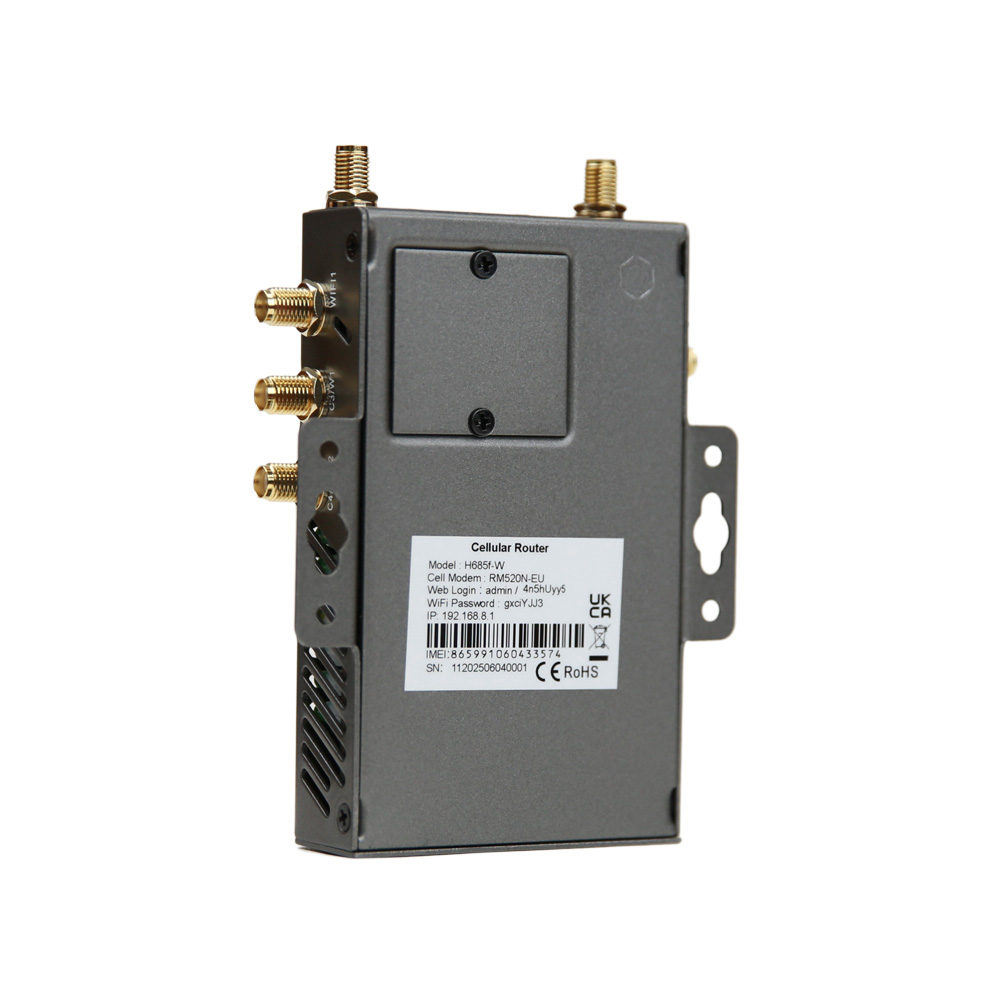
The H900f features integrated RS485 serial ports enabling direct connection to SCADA field devices without external converters. Its industrial-grade components operate reliably across temperatures from -35°C to +75°C, with 15KV ESD protection and 1.5KV electromagnetic isolation addressing harsh environment challenges. The router achieves equipment online rates ≥99.5%, critical for unattended remote installations where connectivity failures trigger expensive site visits.
Security implementation includes comprehensive VPN protocol support spanning IPSec, WireGuard, and OpenVPN. The routing hardware incorporates dedicated encryption acceleration, maintaining Gigabit throughput even with full IPSec encryption enabled. This performance ensures SCADA data security without introducing latency that could compromise real-time control applications.
Dual SIM hot backup functionality provides additional reliability through automatic failover between cellular carriers within seconds of detecting primary connection failure. For critical SCADA applications where continuous connectivity proves mandatory, this redundancy eliminates single points of failure in wireless communication infrastructure.
Implementation Architecture and Integration
Deploying 5G industrial routers for SCADA applications follows straightforward integration patterns. Field devices connect via RS232 or RS485 serial interfaces, with the router performing protocol conversion to TCP/IP encapsulation. The cellular connection establishes an IPSec VPN tunnel to the central SCADA server or cloud platform, creating a secure transparent communication path.
The router’s hardware watchdog timer automatically restarts the system if software hangs occur, ensuring recovery from unexpected failures without manual intervention. Remote management capabilities via TR-069, SNMP, and SSH protocols enable centralized configuration and monitoring across distributed installations, reducing operational overhead.
E-Lins Technology’s solutions include PoE++ (Power over Ethernet) support on select models, simplifying installation by delivering both data connectivity and power through standard Ethernet cabling. This capability particularly benefits solar-powered remote sites and locations where AC power availability proves limited.
Validated Performance in Carrier Infrastructure
Real-world deployments demonstrate the reliability of properly engineered industrial 5G routers. A leading Indian telecommunications operator serving over 230 million subscribers deployed E-Lins equipment for remote base station monitoring across regions experiencing extreme temperatures up to 48°C and unstable power grids with voltage fluctuations from 5V to 55V. The implementation achieved a 99.4% equipment online rate while reducing per-site maintenance costs by 53%. Batch management of 100,000 deployed units improved operational efficiency by 82% through centralized remote management.
Similarly, a European aviation ground support equipment manufacturer integrated E-Lins industrial routers for real-time monitoring of aircraft power and conditioning units across airports in over 100 countries. The deployment achieved ≥99.9% equipment online rates despite electromagnetic interference from radar and communication systems. Remote troubleshooting capabilities enabled 85% of technical issues to be resolved without on-site visits, reducing maintenance costs by 68%.
Cost-Effectiveness and Total Ownership Value
Industrial-grade 5G routers represent a higher initial investment compared to consumer networking equipment, yet deliver substantially lower total cost of ownership for SCADA applications. The reduced maintenance requirements, extended operational lifespan, and avoided downtime costs justify the premium for mission-critical deployments.
E-Lins Technology achieves competitive pricing through focused product development and scaled manufacturing, offering professional-grade equipment at costs typically 20-40% below comparable industrial solutions. The company’s 5G industrial routers range from $180-$220, with 4G alternatives available from $65-$120 for applications where 5G deployment remains premature.
Conclusion
Modern SCADA systems require robust connectivity solutions that balance performance, reliability, and security. The combination of 5G cellular technology, RS485 serial interface support, and IPSec VPN encryption addresses the comprehensive requirements of industrial automation applications. Purpose-built industrial routers engineered for harsh environments and continuous operation provide the foundation for successful SCADA wireless deployments, enabling remote monitoring and control while maintaining the security and reliability that critical infrastructure demands.
https://e-lins.com/
Shenzhen E-Lins Technology Co., Ltd. -
AuthorPosts

- You must be logged in to reply to this topic.