
- This topic is empty.
-
AuthorPosts
-
2026-09-23 at 3:35 pm #12766
A scenario-based approach helps Chinese learners move beyond memorizing isolated words and start using Mandarin in real conversations.
For many Chinese learners, vocabulary is easy to recognize on a flashcard but much harder to use in a real conversation.
A learner may know the Chinese words for “coffee,” “price,” or “weekend,” yet still hesitate when ordering a drink, asking how much something costs, or making plans with a friend. The challenge is not simply remembering more words. It is understanding when, where, and how those words are naturally used.
Chinesia is addressing this gap through scenario-based Chinese vocabulary learning, connecting new words with practical situations learners may encounter in everyday life.
From Vocabulary Lists to Real-Life Chinese
Traditional vocabulary study often introduces words one by one:
restaurant, menu, coffee, tea, expensive, cheap.
Each word may be understandable on its own, but real communication requires learners to combine vocabulary, sentence patterns, context, and intent.
Instead of treating vocabulary as isolated information, Chinesia places words inside recognizable real-world scenarios.
For example, learners may encounter Chinese vocabulary while:
- ordering food at a restaurant,
- buying clothes in a store,
- asking for directions,
- talking about school,
- making weekend plans,
- discussing the weather,
- visiting a friend’s home,
- comparing prices,
- introducing family members,
- or arranging a time to meet.
A word is therefore not only something to memorize. It becomes part of a situation the learner can understand and reuse.
Why Scenario-Based Vocabulary Matters
Learning vocabulary through context helps answer three important questions at the same time:
What does this word mean?
When would I use it?
What would I actually say with it?
Consider the word 一起 (yìqǐ), “together.”
Learning the translation is only the first step. In a real-life scenario, learners can immediately see how it works in expressions such as:
星期天一起去吃饭吗?
Would you like to go eat together on Sunday?The learner is no longer memorizing a single vocabulary item. They are learning how the word functions inside a meaningful communicative task.
This contextual approach can make vocabulary easier to connect with actual Chinese communication.
Building Vocabulary Around Communication Goals
Chinesia organizes learning around practical communication rather than vocabulary volume alone.
A lesson may begin with a simple goal such as:
Ask someone about their plans.
Invite a friend to eat together.
Ask how much something costs.
Describe where a place is.
Vocabulary is then introduced because learners need it to complete that goal.
This creates a clearer learning relationship:
Scenario → Vocabulary → Sentence Pattern → Conversation → Communication
For beginners especially, this structure helps reduce the feeling of studying disconnected words without knowing what to do with them.
Vocabulary Learners Can Hear, See, and Use
Real communication is rarely limited to reading.
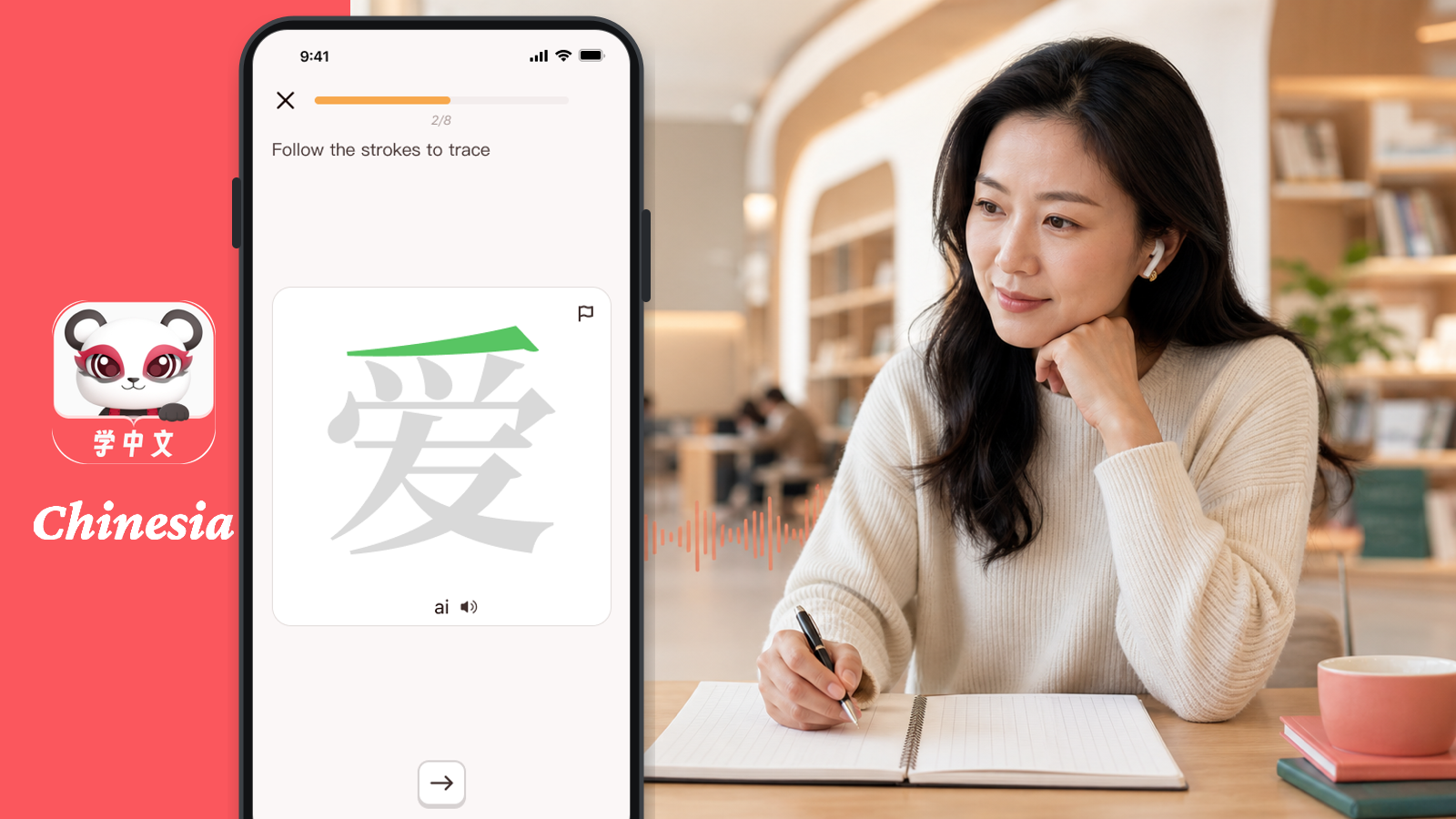
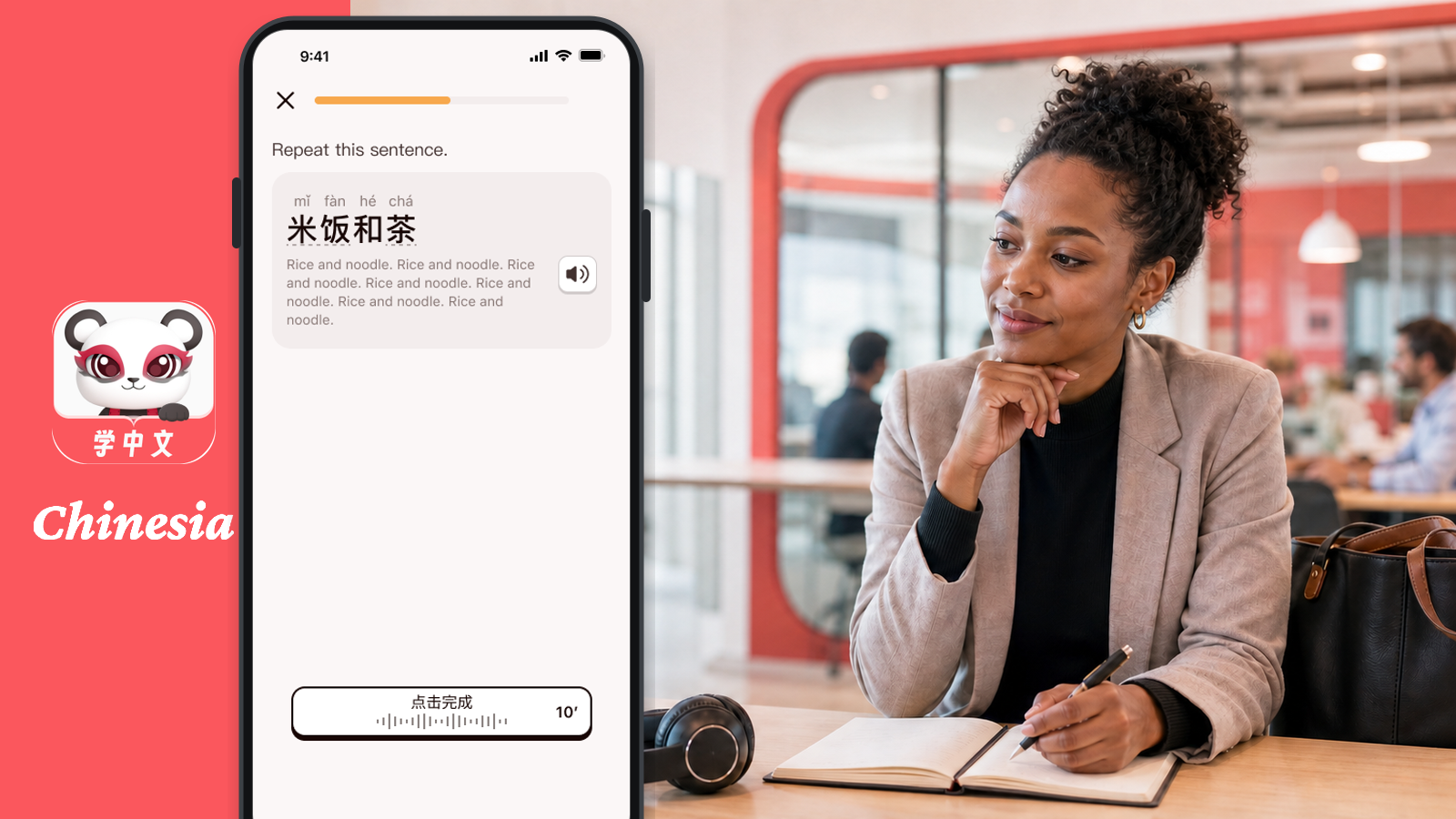
That is why scenario-based learning can combine vocabulary with listening, pronunciation, dialogue, visual context, and speaking practice.
Learners may first encounter a word in a scene, hear it used in a conversation, recognize it in a sentence, and then practice using it themselves.
For example, instead of simply learning:
远 — far
learners can encounter it naturally in a conversation:
公园离这儿远吗?
Is the park far from here?不远。
No, it isn’t far.The vocabulary becomes connected to location, distance, and a real communicative exchange.
Learning the Chinese People Actually Need
Scenario-based vocabulary also allows a course to prioritize words according to practical usefulness.
A beginner does not necessarily need hundreds of unrelated words at once. They need enough vocabulary to complete increasingly useful everyday tasks.
Early scenarios can focus on topics such as:
- greetings and introductions,
- numbers and time,
- food and drinks,
- transportation,
- shopping,
- school life,
- family,
- hobbies,
- daily routines,
- appointments and invitations.
As learners progress, the same approach can expand into more complex situations involving study, work, travel, social interaction, and cultural communication.
The goal is not simply to “know more Chinese words.”
The goal is to do more things in Chinese.
Connecting Vocabulary With AI Conversation Practice
Knowing vocabulary in context becomes even more valuable when learners have an opportunity to use it.
Chinesia extends scenario-based learning into AI-powered conversation practice, where learners can interact with virtual characters in simulated real-life situations.
After learning vocabulary related to a restaurant, for example, a learner can practice ordering food.
After learning expressions for time and invitations, they can practice arranging plans with another person.
This creates a learning loop:
Learn → Understand → Practice → Speak
Instead of ending with recognition, vocabulary becomes a tool for communication.
Making Chinese Feel More Usable From the Beginning
For many learners, one of the biggest motivational challenges is the distance between “studying Chinese” and “being able to use Chinese.”
Scenario-based vocabulary helps shorten that distance.
Even at an early level, learners can begin completing small but meaningful communication tasks: greeting someone, asking a question, buying something, making an invitation, or expressing a preference.
Each scenario gives vocabulary a purpose.
Each conversation gives learners a reason to remember it.
And each successful interaction helps Chinese feel less like a collection of words to memorize and more like a language they can actually use.
About Chinesia
Chinesia is a Chinese-learning platform designed to help international learners build practical communication skills through structured courses, real-life scenarios, interactive practice, and AI-powered conversations.
By connecting vocabulary, grammar, listening, speaking, and cultural learning with everyday communication, Chinesia aims to make learning Chinese more contextual, practical, and engaging.
Whether learners are studying Chinese for daily communication, travel, study, work, or the HSK, Chinesia provides a pathway from learning individual words to confidently using Chinese in real situations.
https://www.chinesia.com.cn/
Chinesia -
AuthorPosts

- You must be logged in to reply to this topic.