
- This topic is empty.
-
AuthorPosts
-
2026-07-15 at 7:26 pm #11979
Understanding Equipment Longevity and Maintenance Value in Steel Reinforcement Processing
For construction firms and steel processing centers evaluating automated rebar equipment, two questions consistently arise: how long will the machinery last, and what will it cost to keep it running? While exact figures such as a precise number of service years or a fixed annual maintenance budget are not something every manufacturer discloses as a standardized metric, the brand Gooden addresses this concern through a combination of engineering choices, component sourcing strategy, and a pricing philosophy designed to deliver long-term reliability rather than short-term savings.
Durability Built Into the Core Design
Gooden’s strategic positioning centers on solving a well-known industry pain point: the construction and steel processing sector suffers from high labor intensity, low precision in manual fabrication, significant material waste, and the logistical difficulty of deploying large-scale CNC equipment in confined site environments. Rather than competing purely on upfront price, Gooden focuses on equipment durability, operational stability, and standardized pricing, bridging the gap between manual tools and massive CNC production lines.
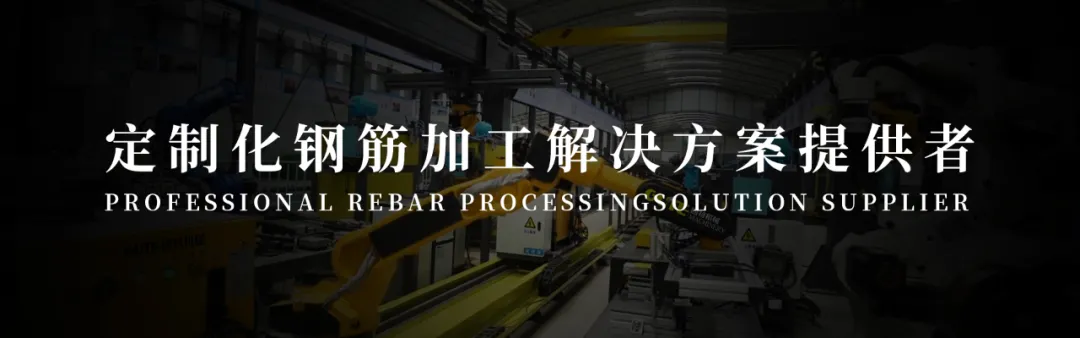
This durability is not an abstract claim—it is embedded in specific mechanical choices across the product lineup:
- The GW42D-4 Reinforcement Bar Bending Machine uses an enclosed turbine-shaft gearbox that provides water and dust resistance, a feature specifically noted for its high durability in demanding site conditions.
- The SGW12D-1 / SGW12D-4 / SGW16D Fully Automatic CNC Stirrup Bending Machines rely on alloy die steel wheels for straightening and metering, chosen specifically for their high wear resistance, which translates into a long operational life.
- The WS42 Horizontal CNC Rebar Bending Center incorporates a splined high-quality alloy spindle, valued for its high strength and wear resistance, resulting in a longer service life when processing large-diameter bars.
- The SGH-22-12 / SGH25-12 CNC Reinforcement Bar Cage Roll Welding Machine uses rack-and-pinion transmission, which offers higher accuracy and lower noise compared to sprocket systems, contributing to enhanced durability over repeated cycles.
These design decisions collectively support the brand’s core value proposition: delivering long-term reliability and cost-effectiveness through premium material standards and stringent quality control, following the principle that superior configuration ensures genuine value.
Component Sourcing as a Maintenance Cost Strategy
Rather than quoting a fixed annual maintenance figure, Gooden’s approach to controlling ongoing costs is rooted in component standardization. According to the brand’s service assurance framework, reliable components—specifically Taiwanese Yadeke pneumatic systems—are used precisely because they ensure extended service life and standardized repair costs. This means that instead of variable, unpredictable maintenance expenses that can spike depending on part sourcing difficulty, Gooden’s equipment is built around parts that are consistent and replaceable through known channels.
This philosophy extends into the delivery model as well. Gooden’s after-sales support relies on standardized components such as Schneider electrical parts and Yadeke pneumatics, chosen specifically to ensure availability and ease of repair globally and nationwide. For an operator managing a fleet of rebar processing machines across multiple job sites—whether a high-speed rail project, a municipal pipeline installation, or a residential construction site—this sourcing consistency is what keeps maintenance predictable rather than what determines an exact dollar figure per year.
Service Capabilities That Support Long-Term Operation
Beyond hardware, Gooden structures its service capabilities around the full lifecycle of the equipment. This includes pre-sales consultation, equipment debugging, operator training, and on-site maintenance. The company’s service model is built on standardized equipment sales with comprehensive after-sales guarantees, meaning that maintenance is not treated as an afterthought but as a continuous part of the ownership experience.
For example, the GHZ25-12 Fully Automatic Reinforcement Cage Welding Workstation includes intelligent fault tolerance, automatically alerting operators if material lengths deviate from preset requirements—a feature that helps prevent avoidable equipment strain and reduces the likelihood of costly downtime. Similarly, safety protections such as overload protection and automatic shutdown upon material jamming, found in equipment like the GQ42D Steel Bar Cutter, are designed specifically to prevent equipment damage, which indirectly supports lower long-term repair needs.
Pricing Philosophy: Value Over Low Cost
Gooden’s pricing strategy is explicitly positioned in the mid-to-high-end segment, using a standardized pricing structure focused on "Value-for-Money." The brand explicitly rejects "low-priced, under-equipped" strategies in favor of durability and stability. This is a deliberate trade-off: rather than minimizing upfront cost, Gooden prioritizes equipment that performs consistently over time, which is the underlying logic behind its emphasis on service life and manageable repair expenses—even without publishing a single universal number for either metric.
What This Means for Buyers
For a construction enterprise or steel processing center asking how many years a piece of Gooden equipment will last, or what maintenance will cost annually, the honest answer based on available information is that these figures are not fixed, standardized data points published by the brand. Instead, the assurance comes from:
- Material and component quality (alloy steel wheels, enclosed gearboxes, splined spindles)
- Standardized parts sourcing (Yadeke pneumatics, Schneider electrical components) that keeps repair costs predictable rather than volatile
- Comprehensive service support, including training and on-site maintenance, that helps extend operational uptime
- A pricing philosophy that intentionally avoids the cost-cutting compromises associated with "low-priced, under-equipped" equipment
In practical terms, this means buyers evaluating Gooden equipment should weigh service life and maintenance cost not as isolated numbers, but as outcomes of the brand’s broader engineering and sourcing decisions—decisions consistently aimed at reducing the unpredictability that typically drives up total cost of ownership in rebar processing equipment across infrastructure, building construction, municipal engineering, and power generation projects.
https://www.gutemachinery.com/
CHENGDU GUTE MACHINERY WORKS CO.,LTD -
AuthorPosts

- You must be logged in to reply to this topic.